
Dyslexia Signs in Young Children (And What Parents Can Do Early)
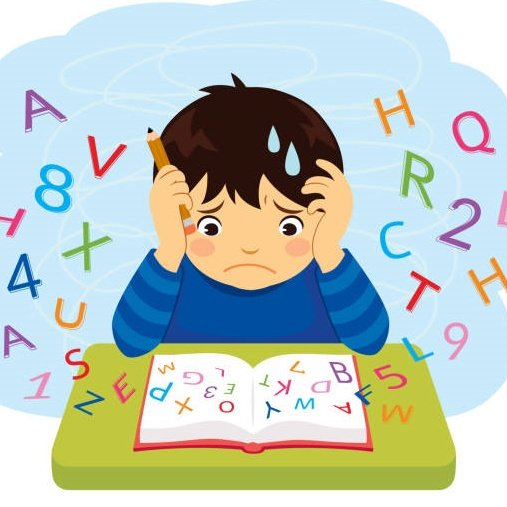
Many parents wonder whether their preschooler’s reading struggles are normal or early signs of dyslexia. Spotting dyslexia signs in young children early can make a big difference in your child’s confidence and learning progress.
Here are the most common early signs of dyslexia in preschoolers and what parents can do right away.
Early Signs of Dyslexia in Young Children
1. Difficulty recognising letters
Children may forget letters easily, mix up similar letters (b/d, p/q), or struggle to recall their sounds.
2. Trouble learning letter sounds
One of the clearest early signs of dyslexia is weak letter–sound association. The child may know a sound today but forget it tomorrow.
3. Slow vocabulary growth
Children may struggle to learn new words, name objects, or remember words they just learned.
4. Weak rhyming skills
Difficulty recognising or creating rhyming words is a common sign of dyslexia in preschoolers.
5. Mixing up directions
Confusion with left/right or spatial concepts can sometimes appear early.
6. Difficulty following multi-step instructions
For example, remembering only the first step of a simple instruction.
What Parents Can Do Early
1. Create a simple daily reading routine
Short, consistent sessions help children build familiarity with words and sounds.
2. Use multi-sensory learning
Tracing letters, using Play-Doh, and hands-on activities help dyslexic children remember better.
3. Focus on phonics, not memorising
Blend sounds, clap syllables, and play “what sound does this start with?” games.
4. Repeat, repeat, repeat
Children with dyslexia require more revision and repeated exposure.
5. Seek early intervention
If several signs persist for months, consider a screening by a speech therapist or educational psychologist.
Final Thought
If you’re noticing early signs of dyslexia in your child, don’t panic. Early awareness lets you support them before reading becomes a struggle. With the right tools and simple practices, your child can become a happy, confident reader.
Comments

Case of Improving Dyslexia
——————————-
Just sharing, we have a daughter with dyslexia, and she struggles to retain information for more than a week. This causes her to do poorly in spelling, maths, and basically all subjects. Through research, we realised that children with learning difficulties often need time, patience, and the opportunity to go through the same storybook again and again until the words finally sink in.
Thankfully, we discovered that reading books really helps her. But the challenge was that she needed us to read the same storybook over and over, many, many times. Sometimes until we were completely drained.
Then we came across OtterCanRead. If you search for their website on Google, you can read that the founder’s daughter also has learning difficulties, and that’s why he created this web-app. It’s filled with storybooks designed for repetition learning.
When using the web-app, our daughter can revisit books endlessly and slowly build vocabulary at their own pace. (without our constant help). Its really good for parents to have tools to reduce their loads.
Now, our daughter has improved so much that she is being recognised for her leadership. She went into the best class of her primary school. Still, she struggles with her math, but our effort is getting lesser by the year. For her spelling, we used to give her spelling daily, til now, once weekly. Sometimes she can handle school’s spelling totally without us.
We believe the long term building on reading and repetition learning do helps.
Do give it a try — it’s free to use. Hope it can bring your child the same small victories and slowly builds their confidence.
Just go to OtterCanRead.com